
LuNaDrone: extreme
mobility for the Moon
By Evolunar
The Evolunar Project
POST-LANDING
MOBILITY SERVICES
KEY FEATURES
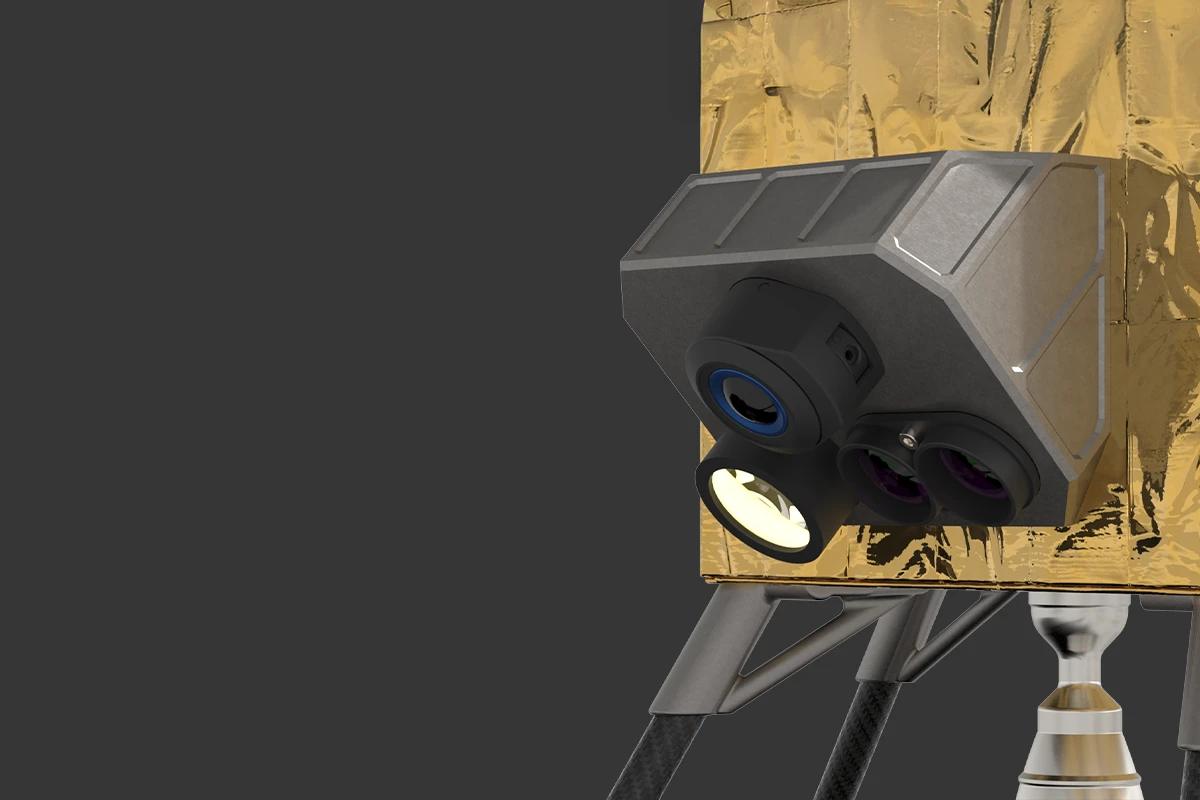
Autonomous Navigation
Evolunar’s proprietary visual-inertial architecture is engineered to operate reliably and robustly in the extreme conditions of the lunar environment.
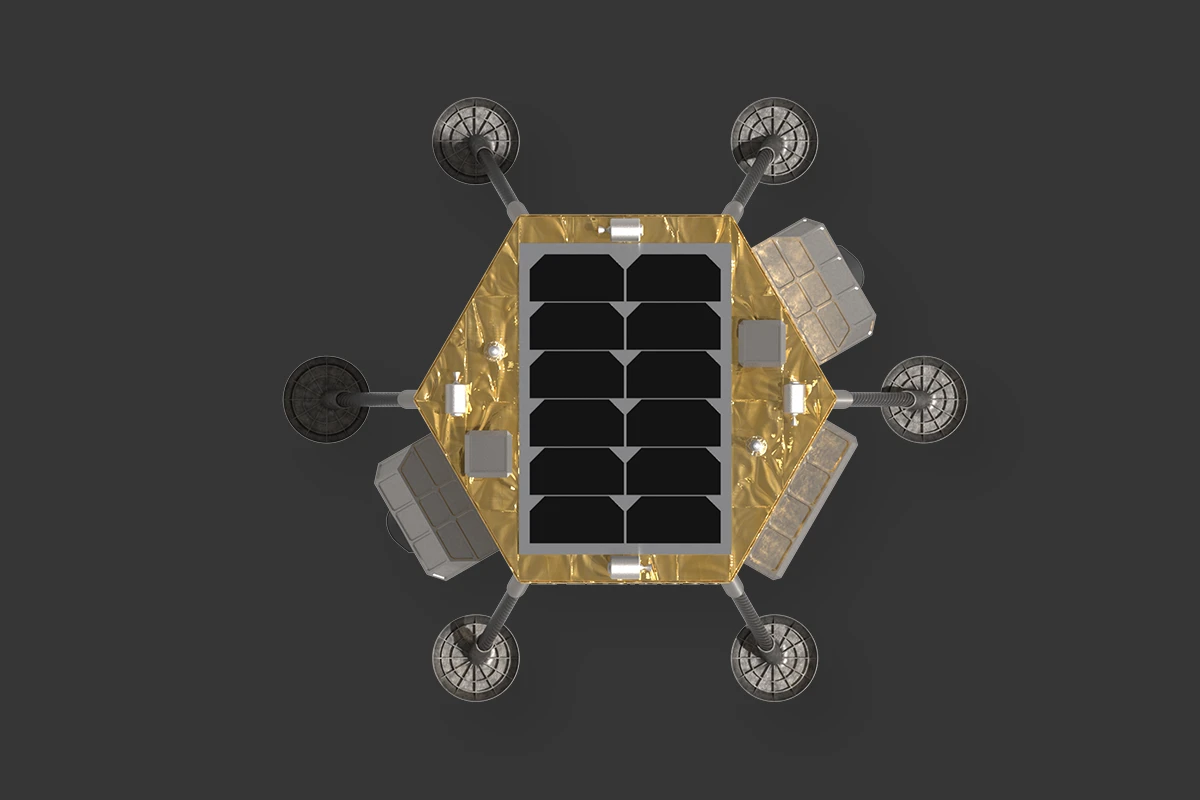
Last-mile delivery
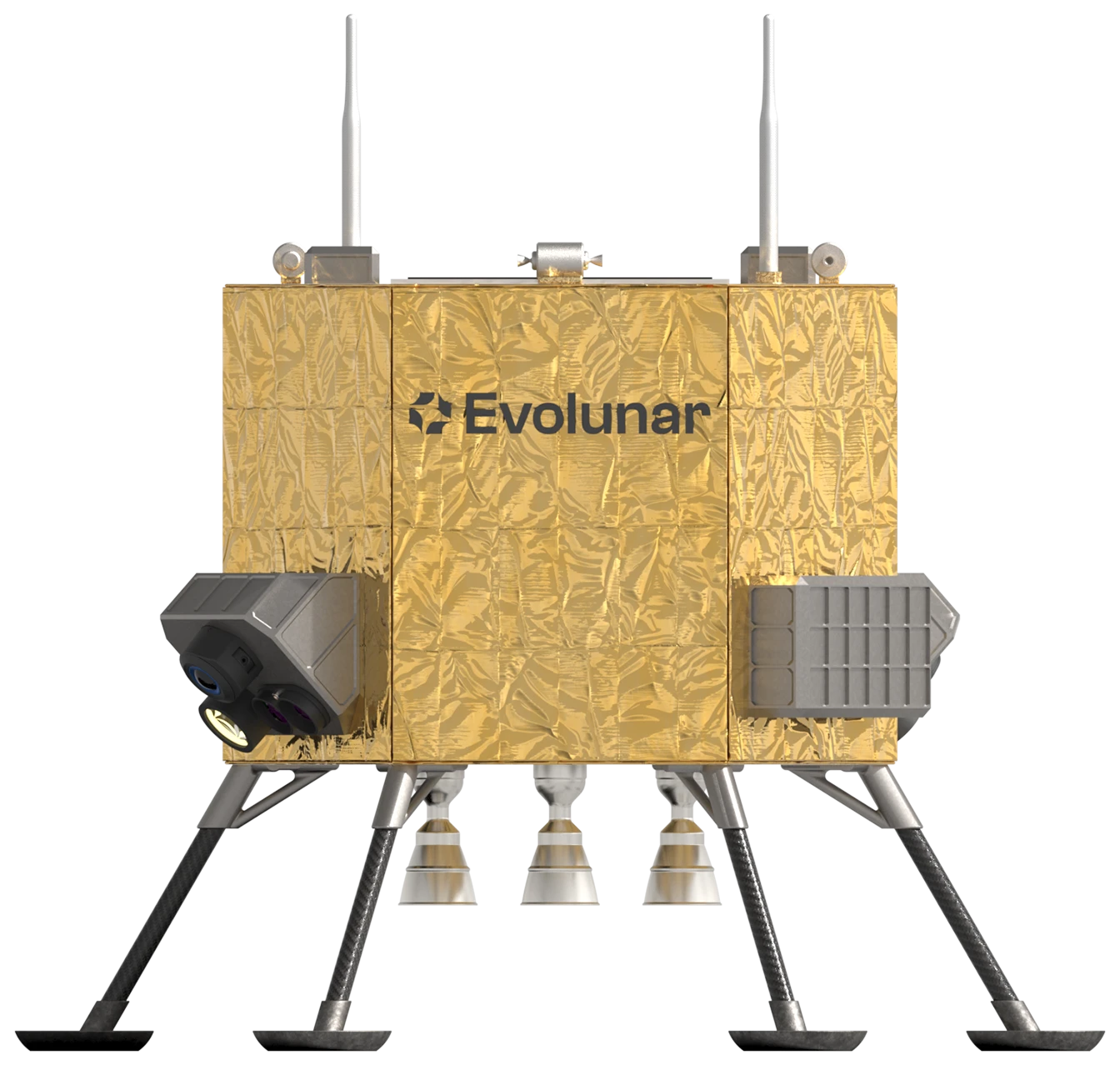
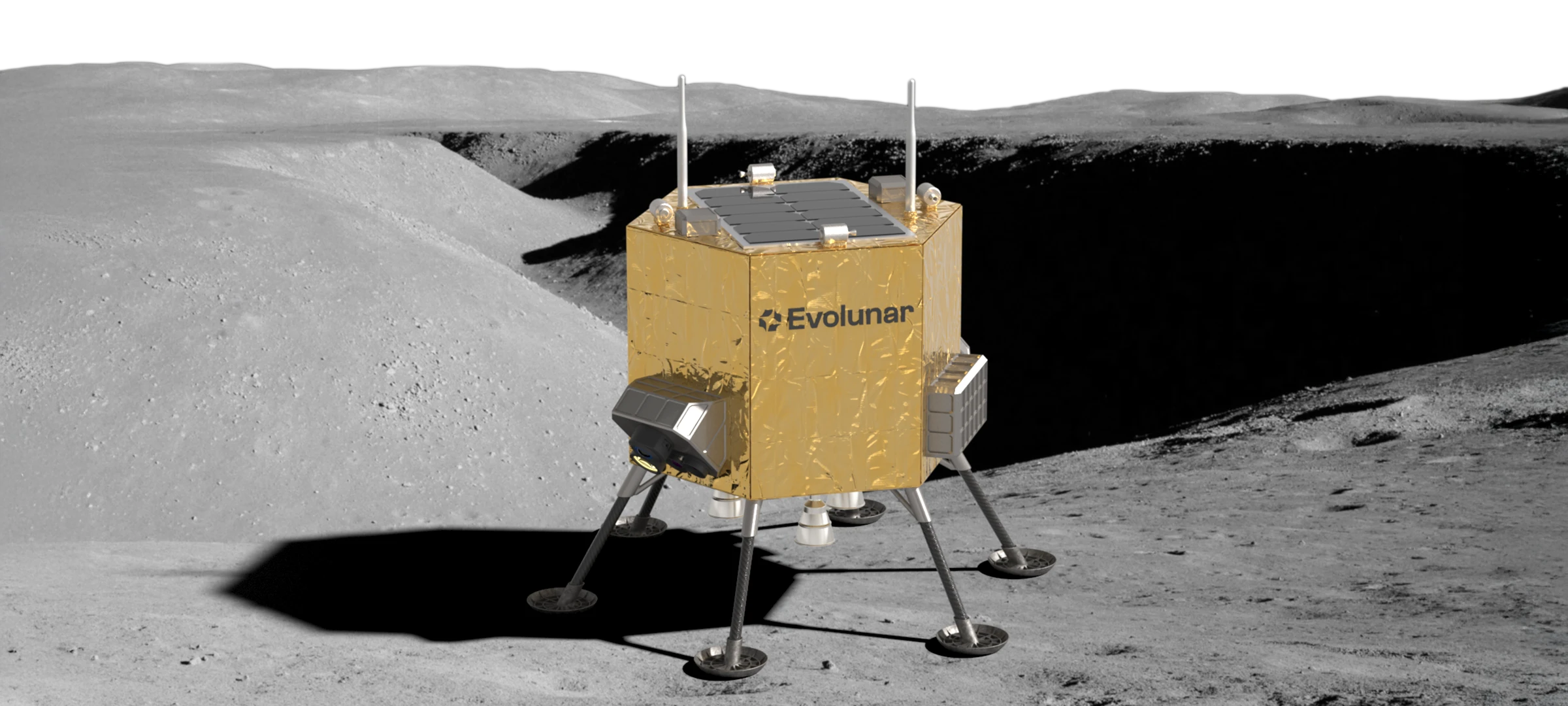
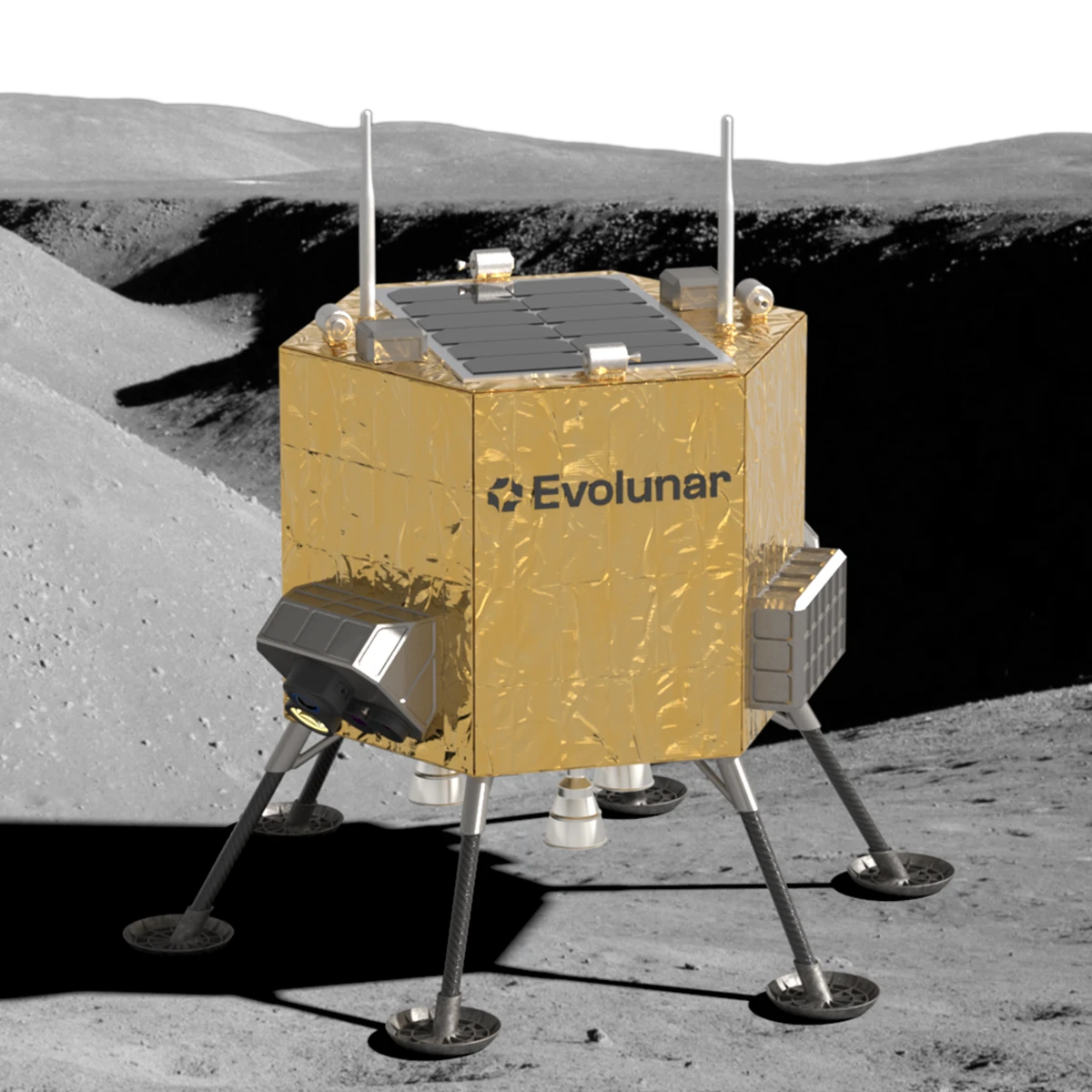
LuNaDrone can transport internally or externally mounted payloads and provide them with power and communication links according to customer's requirements
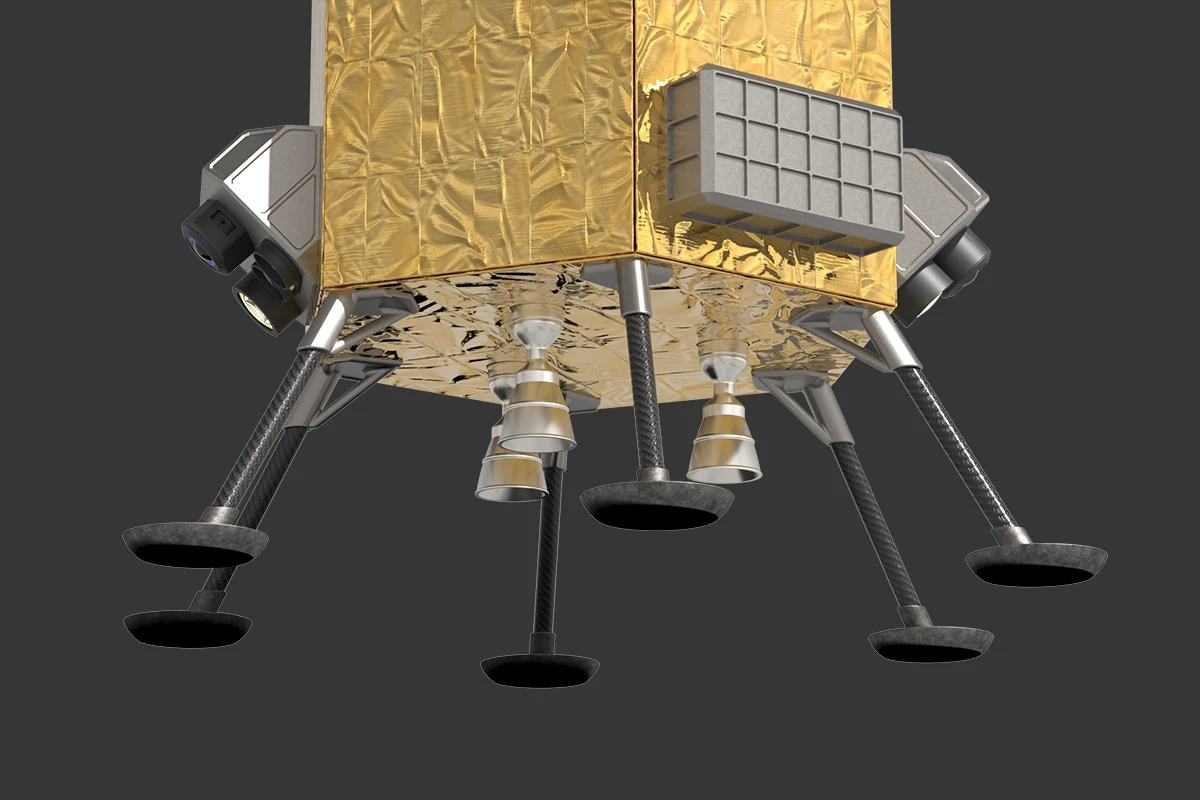
Unlimited Scouting Capabilities
Three monopropellant rocket engines enable LuNaDrone to reach any location in a matter of minutes
HOW EVOLUNAR
CAN HELP
HUMANS LIVE ON
THE MOON
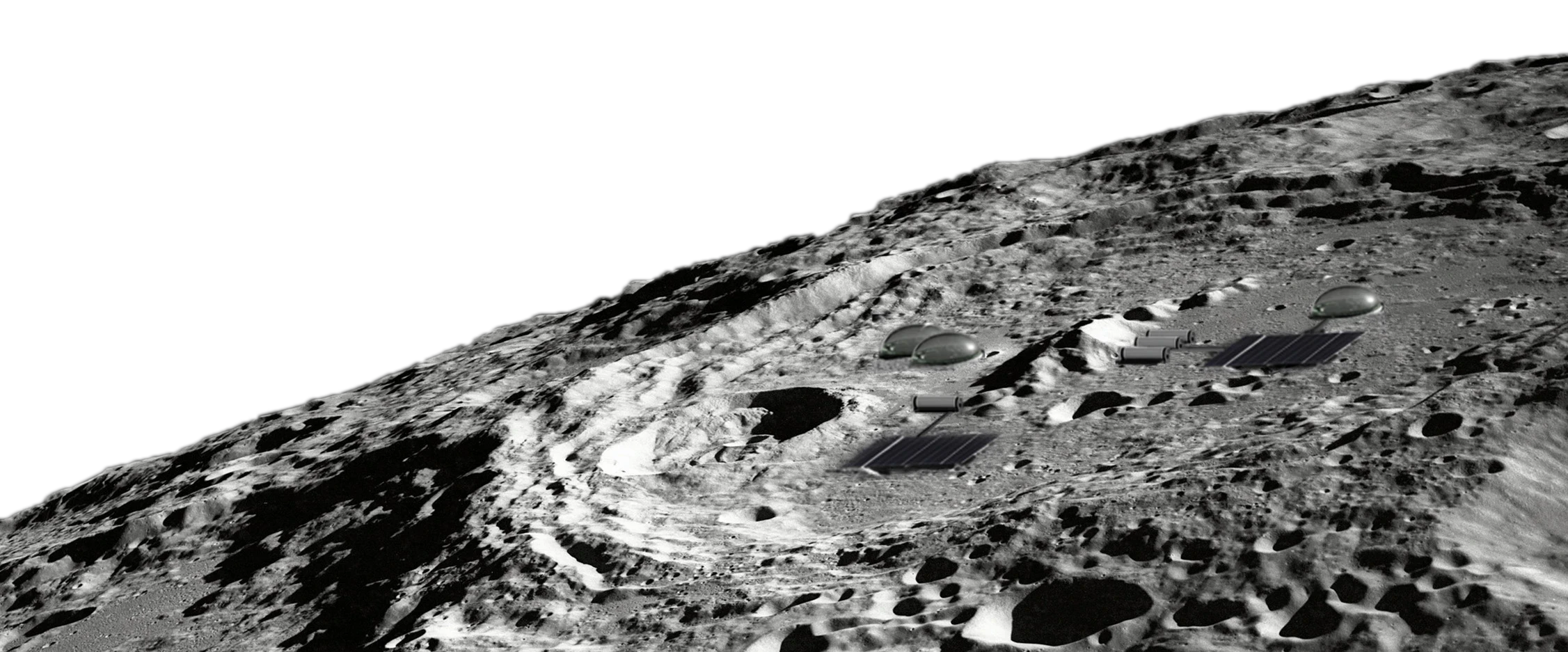
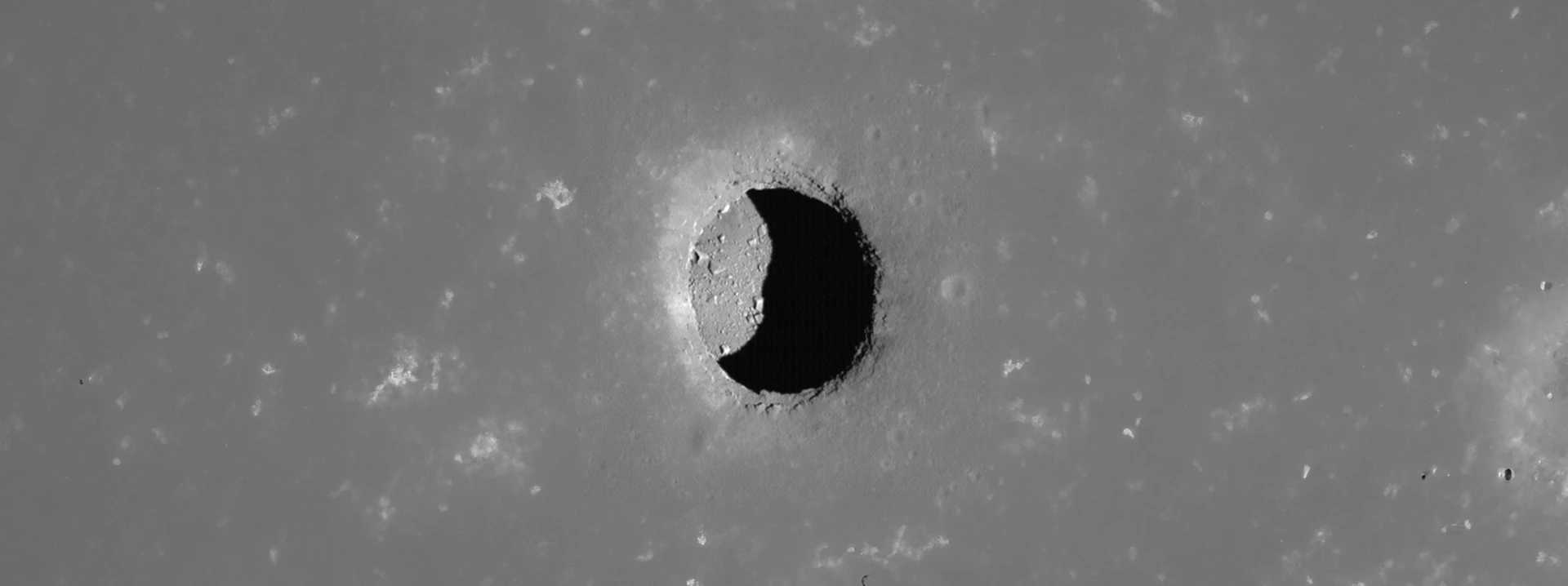
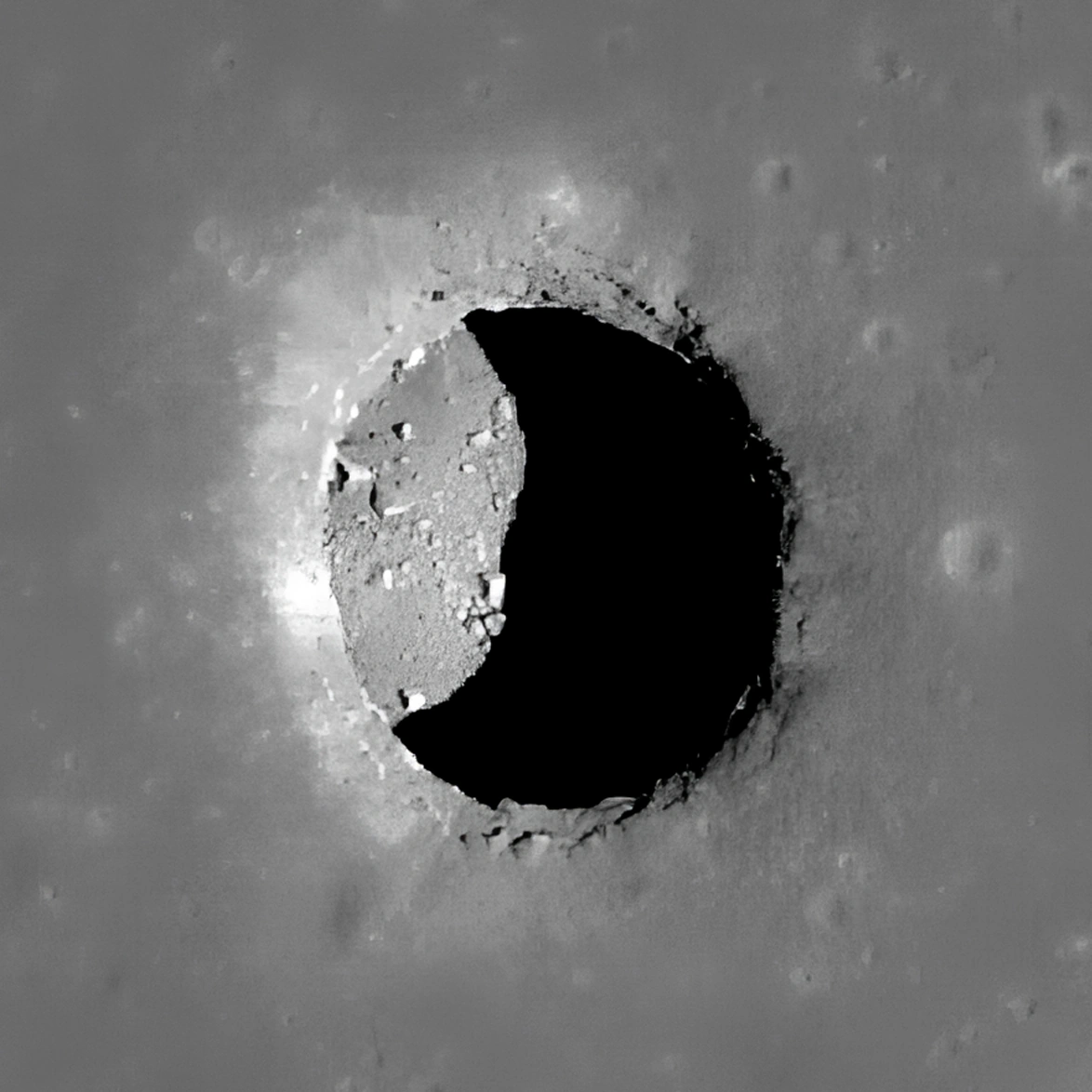
This is why in recent years we have seen a growing interest in the exploration of lunar lava tubes, as these underground caves would provide shelter from energetic particles, cosmic radiation, micrometeoroids, and extreme temperatures.
However, it is impossible, just from orbital images, to assess if they actually give access to a cave or not. Instead, we can use LuNaDrone to explore these sites.
HOW WE FLY
ON THE MOON
take-off to the final landing site of the expedition
Insights
Use cases

- • Identify resources to be mined
- • Detect potential hazards and collect critical data for efficient mission planning
- • Cooperate with other vehicles, assist with path planning and the identification of sites of interest, to better exploit the limited mission time
- • Scout lunar pits to assess the presence and the accessibility conditions of a lava tube entrance
- • Transport payloads from the landing site to more valuable locations
- • Support future human bases with swarms of drones that can be refilled in recharging stations
Propulsion System
This system forms the heart of the spacecraft, playing a critical role in both its mass and overall performance.
At Evolunar, we are developing an advanced Propellant Feeding System that easily integrates with other on-board systems while offering flexible modularity. Our scalable design allows for adjustable propellant volumes and engine classes, enabling longer missions and larger payload capacities.
We are also addressing several unique challenges specific to this innovative type of vehicle, including sloshing, rapid emptying times, and control dynamics.
Navigation System
By jointly developing hardware and software, we are able to provide an optimized, compact and efficient solution, capable of operating in real-time with high accuracy and at the same time minimizing the mass and power required for operation.
The system splits the tasks among different processing units to leverage the benefits of each one and exploits an easily extendable base set of sensors comprising of IMU, Camera, and Rangefinder. It employs a complex proprietary multicamera architecture, coupled with a strong step of outlier rejection to increase global robustness.
This approach results in higher accuracy and allows navigation in a potentially unlimited range of vehicle attitudes, but also increases resiliency and redundancy: in case of damages to one of the sensors, the algorithm is able to rely on the remaining ones to maintain operativity.
Il progetto LuNaDrone Sviluppato da EVOLUNAR SRL è realizzato grazie al co-finanziamento Programma Regionale F.E.S.R. 2021/2027 Sostegno alla prima crescita delle start up innovative. AZIONE I.1i.2 "Supporto alle start up innovative e a spin off della ricerca"
Il progetto ha avuto come finalità l'innalzamento del livello di maturità tecnologica dei sottosistemi critici del LuNaDrone. Le attività hanno portato alla validazione del funzionamento del sistema di gestione del propellente e del sistema di navigazione autonoma, oltre che al deposito di domande di brevetto relative a quest'ultimo.




Be the first to be notified
Contact us for any information. Want to start a partnership?
Want to learn more about our work? Give us your feedback